
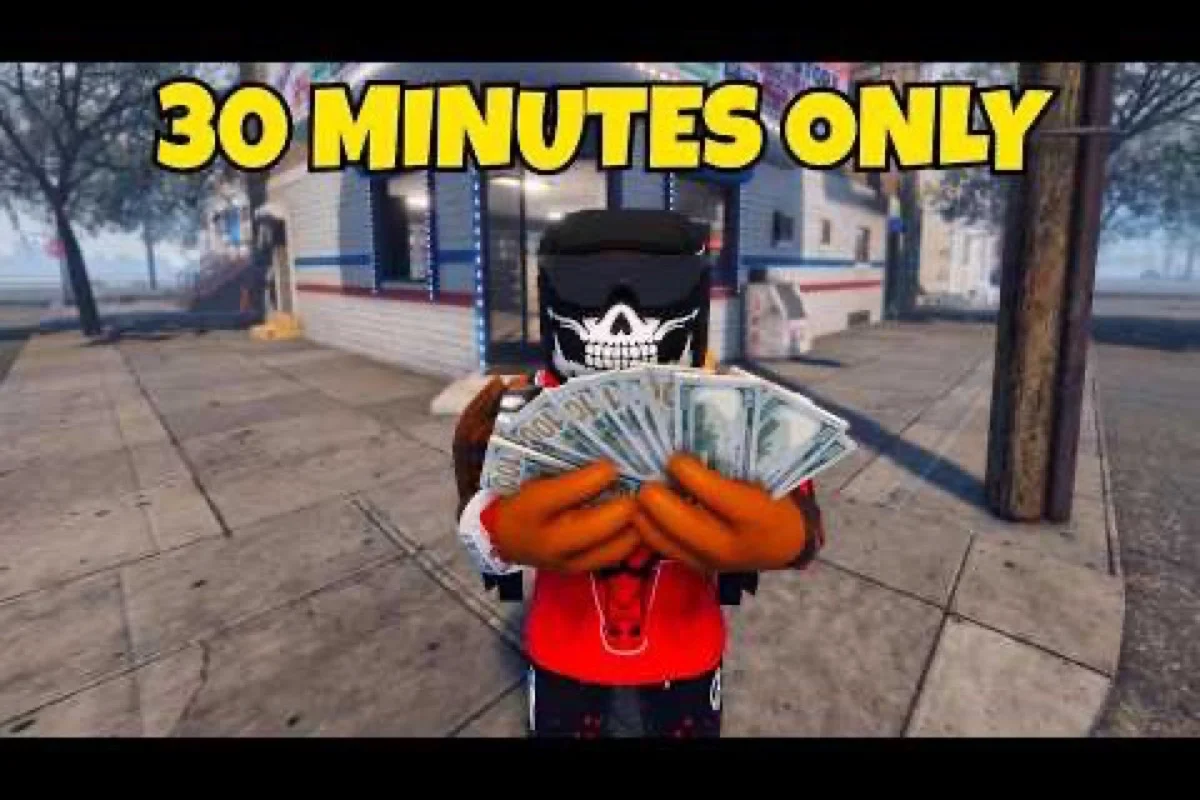
The THA BRONX 3 first hour matters because early decisions shape your money, combat confidence, and ability to recover from mistakes. Learn the movement, build a short earning loop, compare weapon prices, and make your first major purchase only when the value is clear.
What to Finish in the First Sixty Minutes
Your first session should be about building a reliable routine, not collecting every item you see. The main THA BRONX 3 first-hour goal is to learn where money comes from, how the world responds when you move, and which purchases improve your next run without locking you into a weak loadout.
The official THA BRONX 3 Roblox page identifies 223Z STUDIOS as the developer and lists public servers of 30 players. As of October 24, 2026, the page also showed roughly 12.17 million visits, 21,800 favorites, and a 91.7% like ratio, so expect a busy world where positioning and awareness matter.
A practical first-session checklist
Use this order during your first hour: identify a nearby cash source, learn its interaction, and complete it once before exploring or buying equipment. In practice, that means checking shops, street activity, and available jobs, then choosing one route that can be repeated. This prevents the common mistake of spending every dollar before learning a dependable income route, because cash reserve gives you room to react when a sale fails, a weapon is poorly priced, or danger forces a retreat. The goal is a repeatable first-hour loop, not constant movement.
- Spawn, move through nearby streets, and note which areas feel busiest.
- Complete one short source of money and repeat it once.
- Compare several shop prices before purchasing a gun.
- Test reloads, aiming, sprinting, and cover in a low-risk area.
- Keep a small cash reserve instead of spending every earned dollar.
- Review your inventory and remove items that do not improve your current plan.
This sequence supports the broader THA BRONX 3 beginner guide, but the immediate focus should remain on building one repeatable loop that you can finish before danger becomes a problem. Treat the first hour as a controlled test: complete the same short cash route twice, then use the remaining time to compare prices, reloads, and cover positions around it. If a sale fails or a weapon shop overcharges, you can fall back to the proven route instead of improvising while pursued. The practical benchmark is not “earn as much as possible,” but whether you can reliably restart, bank cash, and exit a bad encounter without losing your gear.
Recommended time allocation
| Time | Main objective | What success looks like |
|---|---|---|
| 0–10 minutes | Learn movement and the local area | You can sprint, jump, and use cover without stopping to read every screen |
| 10–25 minutes | Find and repeat one money source | You can describe the exact steps and estimate the payout |
| 25–40 minutes | Compare shops and weapon values | You know why one option is better than the cheapest alternative |
| 40–55 minutes | Test the loadout in a controlled encounter | You understand the weapon’s range, reload time, and handling |
| 55–60 minutes | Review purchases and set a next goal | You still have cash and a clear reason to keep playing |
This is not a strict timer. If an area becomes crowded, delay the combat test and continue earning. The value of a THA BRONX 3 first-hour plan is that it reduces rushed decisions, not that it forces every player into the same schedule.
Movement, Aim and Cover in Your First Session
Movement is the foundation of survival, especially in a public server with up to 30 players. Before evaluating any weapon, learn how your character handles corners, stairs, open roads, and tight alleys. A useful THA BRONX 3 gameplay guide starts with whether you can create distance, turn smoothly, and understand where enemies can see you.
Players should use cover in layers. Standing directly behind a short barrier may block shots from one angle while leaving your head exposed from another. Before entering a street, look for several possible paths, then move diagonally or through connected side areas when possible. This reduces the time enemies need to track you.
Movement checks before your first purchase
| Check | Why it matters | Beginner-friendly standard |
|---|---|---|
| Sprinting | Helps you cross exposed ground and create distance | Use for short commitments rather than holding the key indefinitely |
| Jumping | Changes your height while crossing open areas | Jump during movement instead of stopping in the open |
| Cornering | Reduces the chance of a surprise encounter | Approach slowly and check the next sightline first |
| Cover use | Gives you time to reload or plan a route | Move from one solid barrier to the next |
| Camera control | Helps you monitor activity behind or beside you | Turn before entering intersections and doorways |
Community experience supports a simple principle: fighting from a bad angle rarely becomes good simply because the weapon is new. Practice with a simple starting setup first, then improve the loadout. The THA BRONX 3 first-gun guide can help you evaluate the purchase and inventory stage once you understand how movement affects a fight.
Handling your first encounter
When a threat appears, identify the nearest usable cover before you decide whether to fight. If there is room to disengage, withdrawal may be the strongest choice because losing time is cheaper than losing your money. If the encounter is unavoidable, use short bursts, keep moving laterally, and reload only when cover breaks the opponent’s line of sight.
Do not judge a gun solely by damage. Consider reload speed, control, practical ammunition cost, and the range of your usual routes. A cheaper weapon that fits your normal fights may produce better results than a premium purchase that you cannot afford to feed.
THA BRONX 3 Tips for Finding a Short Money Loop
The strongest first-hour decision is not a purchase; it is a repeatable money route. Begin with one source that takes little time, has a clear payout, and lets you return safely. Once you can complete that route twice without an improvised detour, you have a foundation for a longer session.
A broader explanation of income systems appears in the THA BRONX 3 money guide, but the first-hour goal is narrower: establish a cash baseline. You need enough income to make sensible choices, not enough to buy every desirable item in one visit.
Comparing possible first-hour routes
| Route type | Advantage | Early limitation | Best use |
|---|---|---|---|
| Repeated job activity | Predictable and easy to measure | May take several cycles before the balance feels meaningful | Establishing a baseline before shopping |
| Quick loot action | Potentially fast when the route is clear | Payout and access may vary with other players | Testing the fastest practical route |
| Selling gathered items | Converts exploration into usable funds | Requires storage discipline and good item knowledge | Funding a small first purchase |
| Higher-risk activity | May accelerate savings | Can create losses that exceed the expected gain | Only after movement and survival are reliable |
Community reports are useful for discovering routes, but the best route is the one you can understand and repeat. If a method depends on a rare drop, perfect timing, or a long travel distance, treat it as a bonus source rather than your only income.
Build a simple budget
Before spending, estimate the cash you can access at the start of the first hour and remove money reserved for the next immediate need—such as a short trip, ammunition, healing, or a weapon you are already using. Then divide only the remaining budget into three parts, so a planned purchase in one category does not force you to abandon the rest of your setup. For example, if you have $600 after essentials, you can set fixed caps for operating cash, equipment money, and reserve money rather than treating the full balance as available for gear. This makes it easier to judge whether an upgrade is genuinely useful during the early Tha Bronx 3 loop or merely consumes resources you need for survival and continued progression.
-
Operating cash: Keep enough for ammunition, healing, travel, and routine expenses.
-
Equipment money: Set the maximum amount you are willing to spend while learning a weapon.
-
Reserve money: Leave enough unspent to handle an unexpected loss or wait for a better price.
This structure prevents a large purchase from consuming every resource at once during your first hour in Tha Bronx 3. For example, if your equipment money is capped at $200, a $600 weapon is not automatically a better investment: it can exceed the entire learning budget and leave too little cash for ammunition, healing, travel, or replacing a broken item. Evaluate an upgrade by its effect on the loop you already have—more reliable damage, better handling, or fewer supplies spent per encounter—rather than by appearance alone. If a purchase does not improve your current weapon, cash flow, or survival margin, wait for a better price or a more necessary upgrade.
THA BRONX 3 Weapon Shopping Decisions
Weapons should be compared through the situations you expect to encounter. Players who know the answer to “Where will I use this?” can compare price, handling, reload behavior, and ammunition more objectively. A premium gun is useful only if its advantage matters along your normal route.
Start by making a short list of what you need from a weapon. Do you want more stopping power, easier handling, a faster reload, or simply a dependable option? Buying without a role often leads to duplicate purchases, especially when the shop presents several attractive choices.
Purchase decision matrix
| Question | Cheap starter choice | Mid-tier choice | Premium choice |
|---|---|---|---|
| Will it handle routine encounters? | Usually adequate if used carefully | Likely comfortable | More forgiving in demanding fights |
| Can you sustain its cost? | Easiest to maintain | Manageable after a baseline | Requires a larger reserve |
| Does its advantage fit your route? | Best for simple loops | Useful for mixed activities | Worth considering in specialized situations |
| What happens if you lose it? | Lower total setback | Moderate setback | Potentially disruptive |
| Is the upgrade gradual? | Easy first decision | May need one more saving cycle | Often demands several earning cycles |
Shop prices can change or reflect current game balancing, so confirm the amount shown in your own server. If you want a closer walkthrough of the buying stage, the THA BRONX 3 first-hour setup can be paired with the first-gun guide rather than relying on impulse purchases.
The three-question test
Before buying, ask: Will the item improve your first-hour loop, or simply make each trip more expensive? For example, a pistol that feels strong in the first ten minutes may still lose value if its ammo costs more than the income it helps you earn. Compare the purchase price, expected ammunition cost, and the extra cycles required to recover that spending; if the upgrade delays upgrades to your core weapon, reserve, or movement gear, it may reduce progress rather than accelerate it.
-
What problem does this solve? A vague desire for “better gear” is not a reason.
-
How many earning cycles will it take? Convert the price into cycles using your measured income.
-
What do I keep if the purchase goes wrong? A reserve prevents one mistake from stopping all progress.
This method matters because the price is only one part of the total cost. Ammunition, maintenance, and the value of your time in combat also affect the decision. The better choice is the one that keeps you active without making every trip feel expensive.
Decision Rules That Keep You Alive
These THA BRONX 3 tips and tricks focus on reducing uncertainty. The more information you collect early, the fewer assumptions you carry into a dangerous encounter. Watch how experienced players move, note which routes remain busy, and compare only a few key details instead of copying decisions you cannot explain.
Player-created videos provide useful examples of current weapons and encounters, although creator builds may show gear far beyond a beginner’s budget. The video by Drilla, Bouncing Out With EVERY BINARY in Tha Bronx 3 Roblox, can help you recognize different equipment styles. Treat those examples as inspiration, not as a recommended shopping list.
High-value beginner habits
-
Watch the street before crossing it: A few seconds of observation can reveal movement, vehicle traffic, and likely ambush points.
-
Use a fallback path: Know one alternate route between your money source and the shop.
-
Buy only after observing a second route: Prices alone do not reveal whether the item fits the surrounding activity.
-
Avoid carrying unnecessary value: A large cash total or premium equipment can make you a target.
-
Separate exploration from earning: Complete one money cycle, bank the result mentally, and then explore a different street.
-
Stop after a setback: If you lose funds or equipment, complete one clean cycle before returning to risk.
These habits are especially useful in a server where player count is relatively high. The official game page’s reported like ratio suggests many players approve of the experience, but approval does not make every street safe or every loss recoverable.
THA BRONX 3 How to Get Started With a Two-Plan Strategy
Once you understand movement, income, and shopping, prepare two plans. A safe plan protects your remaining money and uses familiar routes. A growth plan targets one upgrade or explores a better earning method. Deciding which plan to use before leaving a safe area is faster than improvising after a failed encounter.
This approach gives you a simple rule for the next session: complete the safe plan first, then use extra earnings for the growth plan. If the safe plan fails, a setback does not erase your entire progression. If the growth plan succeeds, you know exactly which action produced the gain.
Scenario-based recommendations
| Situation | Best response | Avoid |
|---|---|---|
| Low on cash | Complete the shortest repeatable earning route | Buying a premium option on credit or hope |
| New server | Learn the area and compare prices | Racing straight into the busiest district |
| Strong loadout | Test it in a controlled area before seeking harder targets | Assuming one victory makes the item perfect |
| Recent loss | Rebuild with the starter plan | Immediately doubling down to recover |
| Plenty of cash | Test one planned upgrade | Buying several items without a clear role |
| Uncertain route | Return by the known path | Saving a risky shortcut for low cash |
The THA BRONX 3 how-to-get-rich guide is useful once your basic income is stable, but the two-plan method is better for the opening session because it keeps expectations grounded. Rich-player techniques often assume fast rotations, reliable gear, or experience that a new player does not yet possess.
Frequently Asked Questions
What should I do during the THA BRONX 3 first hour?
Prioritize movement, one repeatable money source, and a basic weapon comparison. Spend the first 25 minutes learning the area and confirming income, then use the remaining time to test shops, weapons, cover, and reloads. Keep a cash reserve so one failed purchase or encounter does not erase your progress.
How much money should a beginner save before buying a gun?
Keep enough cash for ammunition, healing, travel, and several recovery cycles before making a major purchase. Compare the weapon’s price with your measured income rather than assuming a high-tier option is always better. A smaller purchase that you can sustain is usually safer than draining your entire balance at once.
Is the most expensive gun the best choice in THA BRONX 3?
Not necessarily. A premium weapon may perform well, but it can be a poor choice if you cannot afford its operating cost or rarely need its advantages. Compare handling, reload speed, range, ammunition, and price against the encounters you actually face. The best purchase is the one that supports your normal activity loop.
What are the best THA BRONX 3 beginner tips for avoiding early losses?
Learn the area, identify safe cover, and prepare an alternate route before entering a busy street. Avoid carrying unnecessary cash or premium gear while still testing the basics. After a loss, return to one simple earning route instead of immediately taking a riskier action to recover everything.
Should new players follow community money methods exactly?
Treat community routes as leads rather than fixed rules. Confirm the payout, travel time, and requirements in your own server, then repeat the route to measure it. Personal experience from the THA BRONX 3 how-to-roleplay guide can also help if you enjoy structured play, but combat-focused players should prioritize movement and a dependable income loop.