
THA BRONX 3 bug fixes matter because small problems can interrupt a loot run, vehicle chase, police encounter, or prison escape. The official Roblox page showed an October 24, 2026 update timestamp, but no detailed changelog, so this guide separates verified build information from community reports. Get a clear picture of current known issues, balance concerns, map changes, and the history of major updates before your next session.
Reading the Public Update Timestamp
The most reliable starting point is the official THA BRONX 3 Roblox page, published by 223Z STUDIOS. On October 24, 2026, that page displayed an updated build timestamp alongside roughly 12.17 million visits, 3.9K concurrent players, 21.8K favorites, and a 91.7% like ratio. It also listed standard 30-player servers and no VIP private servers, which matters when reproducing bugs that depend on population or server type.
Because the developer does not publish a complete itemized changelog, THA BRONX 3 update notes must be reconstructed from the official timestamp, in-game behavior, and community demonstrations. A timestamp proves that a deployment occurred; it does not prove which exact scripts, weapons, vehicles, or map objects changed. For that reason, claims about a specific correction should remain labeled as confirmed, community-reported, or unverified.
| Evidence source | What it can confirm | What it cannot confirm |
|---|---|---|
| Official Roblox page | Build date, public server size, popularity snapshot | Detailed patch contents |
| Official game client | Current menus, locations, and visible behavior | Exact reason for a change |
| Community reports | Reproducible symptoms and player observations | A permanent developer promise |
| Update videos | Features visible at publication time | Later fixes to those features |
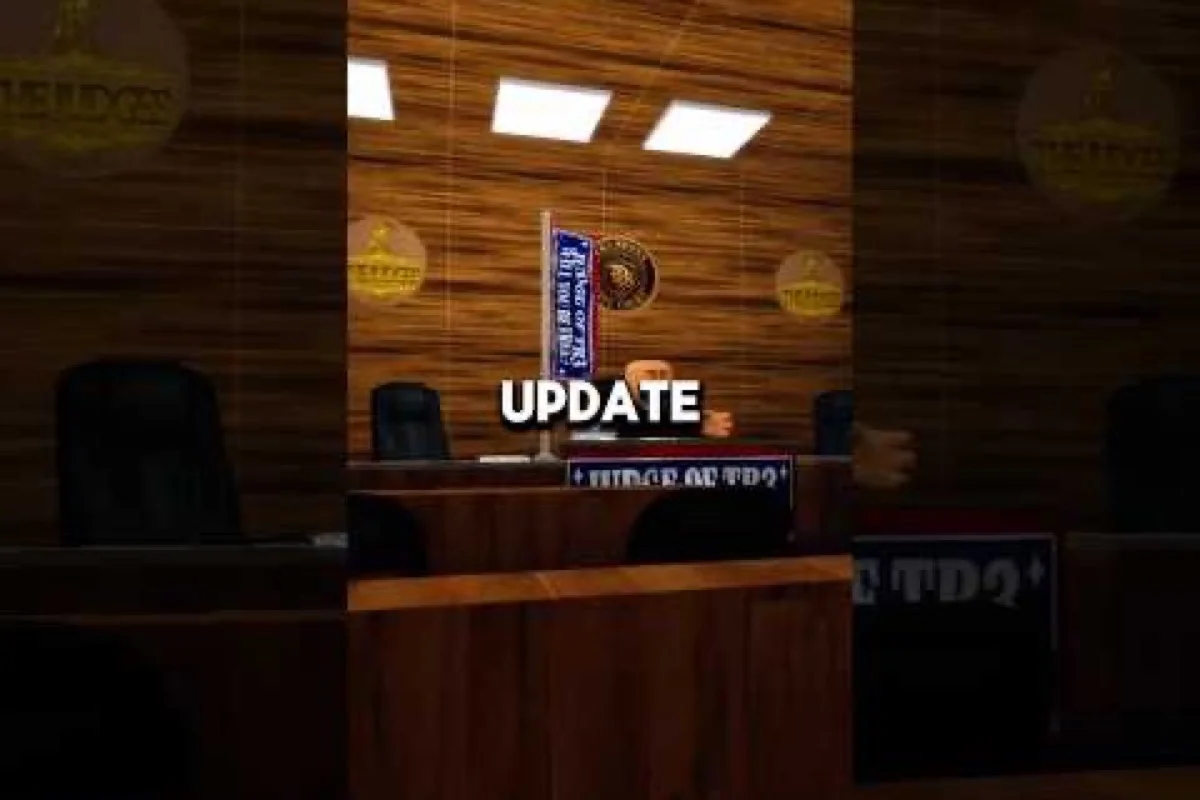
This distinction matters because THA BRONX 3 all updates cannot be treated as one complete list. The evidence describes several major content waves, including a police and prison update, a judge and courtroom update, and an October release that expanded locations and systems. These are not every individual server-side correction, because most hotfixes leave no permanent public record.
Reading the October 24 Build Signal
The October 24, 2026 timestamp is the clearest public sign that the game was maintained on that date. Players testing immediately afterward can compare menus, map geometry, weapon behavior, and roleplay tools against earlier footage. If an issue appears only after the timestamp, label it as potentially related, but avoid claiming causation until the same behavior appears in several sessions.
A useful test sequence is to restart the client, join a standard 30-player server, and repeat the affected action in a less crowded server. This separates a true script or map problem from lag, crowded interiors, visual obstruction, and other population-dependent effects. The RP experience is a separate Roblox place with a slower, rule-driven format, so its behavior should not automatically be treated as evidence about the main action servers.
Building a Complete Update History
The practical THA BRONX 3 update history consists of major content introductions and smaller corrections reported afterward. Major additions are easier to document because landmarks such as the plant shop, prison, 1911 NPC, vehicle recoloring, and court system remain visible. Temporary defects—incorrect collision, missing rewards, disabled animations, or unstable tools—can disappear before a complete report is published.
| Update or content wave | Publicly observable additions | Verification level |
|---|---|---|
| Prison and police update | Officer flow, prison interior, studio job, cribs, plant shop, 1911 NPC, vehicle recoloring | Community showcase and official game presence |
| Judge and courtroom update | Courtroom procedure and judge decision system | Official build plus community demonstration |
| October 2026 update | Expanded map areas, jobs, and new gameplay content | Official timestamp and community reporting |
| Post-update corrections | Unspecified fixes to scripts, collisions, rewards, or interfaces | Individual reports; no formal changelog |
Players who want a broader chronology can also use the THA BRONX 3 update overview to separate major additions from follow-up patches. The right question is not simply whether something changed, but whether the change can be reproduced and documented in a way that helps another player.
THA BRONX 3 Bug Fixes and Known Issue Categories
Current THA BRONX 3 bug fixes are easiest to understand as categories. Because there is no official issue tracker, players usually report visual failures, interaction defects, economy problems, and server instability through community channels. A useful report identifies the server type, the exact location, the action attempted, the expected result, and whether a restart resolved it.
| Known-issue category | Typical player symptom | Best verification method |
|---|---|---|
| Interaction prompt | Pedestal, door, NPC, or tool does not activate | Test from a fresh join and another server |
| Collision or navigation | Character clips, clips through geometry, or gets stuck | Record location and approach angle |
| Economy or inventory | Missing cash, wrong stack, failed storage, unexpected loss | Compare transaction steps and inventory state |
| Vehicle behavior | Poor handling, failed recolor, inaccessible trunk, unwanted collision | Retest on an empty road and in traffic |
| Server instability | Freeze, delayed load-in, animation failure, abrupt reset | Note platform, client, and server population |
| Roleplay system | Judge, court, police, or prison flow does not progress | Follow the full interaction sequence |
Interaction and Inventory Failures
Interaction problems often look like balance issues but are not. If a prompt fails to appear, a weapon cannot be equipped, or a storage interaction does not complete, the cause may be range, line of sight, a busy menu, or a temporary script state. Rebuilding the sequence from a clean join can reveal whether the feature is genuinely unavailable or whether the player retained an earlier interaction state.
Inventory anomalies deserve extra care because they affect the entire economy. A missing item should not immediately be described as a nerf or deletion. Players should note whether the item was collected, sold, transferred, stored, equipped, or consumed during the same session. That sequence turns a vague complaint into a useful evidence chain, especially when checking THA BRONX 3 balance changes.
Collision, Vehicle, and Map Defects
Map-related reports should include the precise route rather than only naming a neighborhood. A stairway that blocks one character may still allow another passage, while a vehicle can be trapped because its chassis intersects street furniture. The separate vehicle customization guide can help distinguish cosmetic issues from handling or collision problems, especially when a recolor appears to have succeeded but the vehicle behaves differently afterward.
Players should test the same vehicle in an empty area before entering crowded traffic. If steering, braking, acceleration, or collision behaves normally on an open road, the issue is more likely environmental. If the same behavior repeats in multiple locations and server types, it deserves a stronger reproduction report and should be compared with earlier footage of the THA BRONX 3 new map.
Server and Roleplay Instability
Freezes, delayed animation, or failed progression can be caused by a local connection, overloaded server, or roleplay script dependency. A hard reset is not proof of a persistent bug, and restarting the client should be treated as a diagnostic step rather than the final fix. Because the main game and RP Server are separate experiences, testing both can clarify whether the problem belongs to a shared system or one specific place.
The community prison and police showcase by Button Bully demonstrates the October 5 content state, but video footage cannot prove the condition of a later build. Likewise, Braidymimi’s judge update review is useful for understanding the courtroom feature, not every correction that followed.
THA BRONX 3 Map Changes and New Location Checks
THA BRONX 3 map changes are easiest to evaluate by comparing recognizable landmarks rather than relying on memory alone. The official page confirms the experience and its October 24 deployment, while community footage documents the plant shop, 1911 NPC, prison, and other additions. Each location should be checked for access, collision, interaction range, and connection to the surrounding street layout.
| Location or system | Change associated with public reports | What players should verify |
|---|---|---|
| Prison area | New prison interior and prison-oriented activity | Entrances, cell interactions, guard paths, load-in |
| Plant shop | New shopping location added to the world | Stock access, purchase prompts, navigation from the Block |
| 1911 NPC | New NPC associated with the weapon | Reachability, purchase flow, inventory result |
| Cribs | Residential locations added or expanded | Door access, interior collision, usable furnishings |
| Studio | Existing job area featured alongside the update | Work prompts, payout, respawn behavior |
| Court and judge area | Courtroom flow and decision process | Hearing progression, verdict, release handling |
Finding a New Map Area After Deployment
The correct first test is navigation, not combat. Players should approach the suspected THA BRONX 3 new map location from more than one route and note whether navigation markers, doors, or NPC prompts remain consistent. If the entrance appears blocked, compare the approach with earlier community footage and inspect whether parked vehicles or other players are obstructing it.
A location can be present on the minimap and still be functionally broken. Missing collision, a nonfunctional door, an NPC standing beyond interaction range, or a reward that fails to register are all distinct issues. A field checklist should therefore record visual availability, physical access, usable interaction, expected reward, and whether the result persists after re-entering the server.
Detecting Broken Connections Between Areas
Map systems can function separately while their connections fail. A player may reach the prison from one street but become unable to return through the intended exit. A court visit may load correctly while the judge fails to advance the case. These boundary errors often appear after a patch because one linked object or script was updated without a matching adjustment elsewhere.
The October 2026 event and update overview helps place the new areas in the context of the broader release. The important test is whether the journey between landmarks remains stable, because successful arrival at the destination alone does not prove that the whole route works.
THA BRONX 3 Balance Changes: Confirmed Facts and Player Reports
THA BRONX 3 balance changes are less transparent than content additions. Weapon values, vehicle performance, economy payouts, and police difficulty can be adjusted through scripts without leaving a named patch entry. The official timestamp confirms deployment, while community reports provide the only practical evidence for individual tuning changes.
A responsible report should compare the same action before and after an update. For a weapon, that means damage, rate of fire, reload time, ammunition consumption, and effective range. For a vehicle, it means acceleration, braking, top speed on a straight route, steering response, and collision reliability. For the economy, it means the value received per completed action rather than a single payout sample.
| Balance area | Evidence players can collect | Common interpretation error |
|---|---|---|
| Weapons | Damage, fire rate, reload speed, magazine behavior | Treating one fight as a complete balance test |
| Vehicles | Acceleration, braking, steering, collision on repeated routes | Blaming map congestion for a handling defect |
| Economy | Cash per run, sale value, storage behavior | Confusing a transaction delay with a reward nerf |
| Police and prison | Time to respond, escape routes, sentence length | Assuming every difficult encounter is intentional |
| NPC and job systems | Consistency of prompts, payout, and respawn | Concluding from a single failed interaction |
How to Test a Suspected Weapon Adjustment
Weapons should be tested in a repeatable environment, preferably with the same target behavior and the same ammunition supply. Record the first engagement, not only the final outcome. Damage falloff, reload timing, and aim control can make a strong weapon look weak or an unstable weapon look dominant.
Because 223Z STUDIOS does not publish detailed patch notes, avoid presenting player measurements as official balance values. Use terms such as community-observed behavior or reported by players until the developer provides a specific statement. That labeling protects accuracy and makes later comparisons possible.
Evaluating Vehicle and Economy Reports
For vehicles, isolate the test from other players and use a consistent road or open area. A vehicle that handles poorly around a sharp corner may still accelerate and brake normally, while a traffic jam can look like weak steering. For economy systems, record every step between acquisition and storage; a missing sale can actually reflect a failed pickup, delayed inventory update, or an earlier storage error.
A balance report is most useful when it separates intended tuning from unintended friction. The first is a design choice that can be balanced later, while the second is a bug that blocks normal play and may disappear in a hotfix without any balance adjustment.
A Practical THA BRONX 3 Patch Verification Routine
A reliable THA BRONX 3 patch verification routine takes less time than repeatedly restarting through every system. Start with the official build timestamp, select one affected feature, and create a minimal reproduction. The goal is to turn scattered impressions into evidence that another player or developer can confirm.
| Step | Action | Evidence to retain |
|---|---|---|
| 1 | Record the current build timestamp and server type | Date, standard or RP, client platform |
| 2 | Reproduce the smallest failing action | Location, prompt, item, or NPC involved |
| 3 | Restart and repeat in a second server | Whether the result changes |
| 4 | Compare with pre-update footage | Specific visual or mechanical difference |
| 5 | Check related systems | Inventory, economy, vehicle, or progression effects |
| 6 | Submit a concise report | Expected result, actual result, reproducibility rate |
Before the Session
Players should clear unnecessary on-screen clutter, update the Roblox client, and note whether they are using a controller, keyboard, or mobile device. They should also avoid beginning with a high-risk scenario such as a police chase. A neutral test gives the clearest result because unrelated damage, crowding, or wanted status can distort the symptom.
During the Test
The test should begin at the relevant landmark and include a fresh interaction. If a prompt fails, check character position, direction, obstruction, and inventory state before declaring a bug. If an item is missing, inspect storage and recent transactions rather than repeatedly purchasing another copy. If a vehicle misbehaves, separate controls, collision, and cosmetic performance.
The THA BRONX 3 beginner guide remains useful for establishing a basic route and expected first-session behavior. If a problem occurs only after a specific purchase, job, arrest, or map transition, note that sequence because it can reveal state-dependent bugs that a clean spawn would miss.
After the Failure
A strong report explains what changed from expectation without exaggerating its impact. Phrases such as “the door did not open in three attempts across two servers on October 24” are more precise than “the update broke everything.” The report should also state what still worked, because that narrows the affected system and reduces the chance of a misleading report.
The THA BRONX 3 update notes can then be organized into confirmed corrections, balance observations, and unresolved issues. Confirmed items have official timing or repeatable behavior. Balance observations are comparative player data. Unresolved issues lack enough evidence and should be retested after the next deployment rather than repeated as settled facts.
What Players Should Track in the Next Build
The next build should be checked against the same landmarks, systems, and interactions used during the October 24 review. That creates a baseline for future comparisons and prevents every altered value from being labeled as a bug fix. Major content should remain stable, while newly reported failures should be checked for repair after installation.
A useful watchlist includes the prison, courtroom, plant shop, 1911 NPC, cribs, studio job, and vehicle recoloring because community materials have documented those areas. It should also include inventory transactions, storage prompts, police calls, judge progression, and the main traffic routes. These are not a formal developer checklist; they are high-value places where map changes and script changes can interact.
| Priority | Area | Reason to test |
|---|---|---|
| Critical | Court, judge, prison progression | A failed step can block the entire roleplay outcome |
| High | Inventory, storage, purchases | Economy problems can affect every subsequent run |
| High | Main roads and new entrances | Navigation changes affect many players at once |
| Medium | Vehicle handling and recolor | Cosmetic and physical systems can be confused |
| Medium | NPC and job interactions | Sparse or crowded servers can produce inconsistent symptoms |
| Ongoing | Weapons and economy values | Balance adjustments may lack formal release notes |
Distinguishing Hotfixes From New Content
A hotfix usually restores a previous behavior or removes an error, while new content adds a system, location, or option. The evidence can make this distinction clearer even without official notes. If a previously visible prompt returns, the likely subject is a correction. If an entirely new destination appears, the subject is an addition. If a value feels different, compare repeated measurements before labeling it a balance change.
The distinction also helps when reading the wider future updates and event overview. Expectations should be tied to observed builds, not community predictions. A planned event can generate strong interest, but only a deployed change belongs in the verified THA BRONX 3 update history.
Maintaining a Personal Patch Log
A personal log should use a narrow format: timestamp, server, affected feature, expected result, actual result, and whether the issue repeated. Attach a screenshot or short clip when the problem concerns a map object, prompt, or visual effect. For balance, add the measured result and the route or target used so later tests remain comparable.
This habit reduces duplicate reporting and makes it easier to notice a true fix. If the same problem disappears after a build, the log can record it as corrected in that build even if the developer never publishes a formal entry. That creates an honest, player-maintained account without inventing patch details.
Frequently Asked Questions
Are there official THA BRONX 3 bug fixes for October 24, 2026?
The official Roblox page shows an October 24, 2026 update timestamp, but it does not provide an itemized changelog. That timestamp confirms a deployment, not the exact fixes inside it. Individual corrections must therefore be verified in the game and compared with community reports, while balance changes should be described as observations unless the developer publishes a specific value or statement.
Where can players find THA BRONX 3 update notes?
There is no complete public patch-note archive comparable to a full developer changelog. The most credible information comes from the official game page, the current client, community issue reports, and videos demonstrating a specific build. Older videos remain valuable for chronology, but they cannot confirm whether a later hotfix corrected the feature shown.
What causes reported THA BRONX 3 map changes to look like bugs?
A new entrance can appear blocked because of collision, crowding, a vehicle position, or an incorrect interaction range. A landmark may also be visible without its server function working. Test the route from another direction, visit a less crowded server, and compare the object with earlier footage before assuming that the THA BRONX 3 new map is entirely broken.
Are weapon and vehicle complaints evidence of THA BRONX 3 balance changes?
Not by themselves. A single fight or crowded drive can reflect aim, latency, route, or traffic conditions. Reliable balance evidence requires repeated tests with the same weapon, target behavior, ammunition, vehicle, and road. Until those tests are available, describe the result as a community-observed balance issue rather than a confirmed developer adjustment.
How should a player report a THA BRONX 3 bug fix request?
Include the build date, server type, exact location, action attempted, expected result, actual result, and number of successful reproductions. A short recording can clarify prompt, collision, or map problems. The report should distinguish a blocking failure from a balance opinion, because the first may require a direct code correction while the second may involve deliberate tuning.
The practical takeaway is simple: use the October 24, 2026 build timestamp as the current public anchor, verify suspected issues through repeatable tests, and avoid treating community observations as official patch notes. With major map additions, police and prison systems, courtroom logic, and economy interactions all in play, a structured bug report gives the player and developer the clearest path from a broken interaction to a verified correction.