
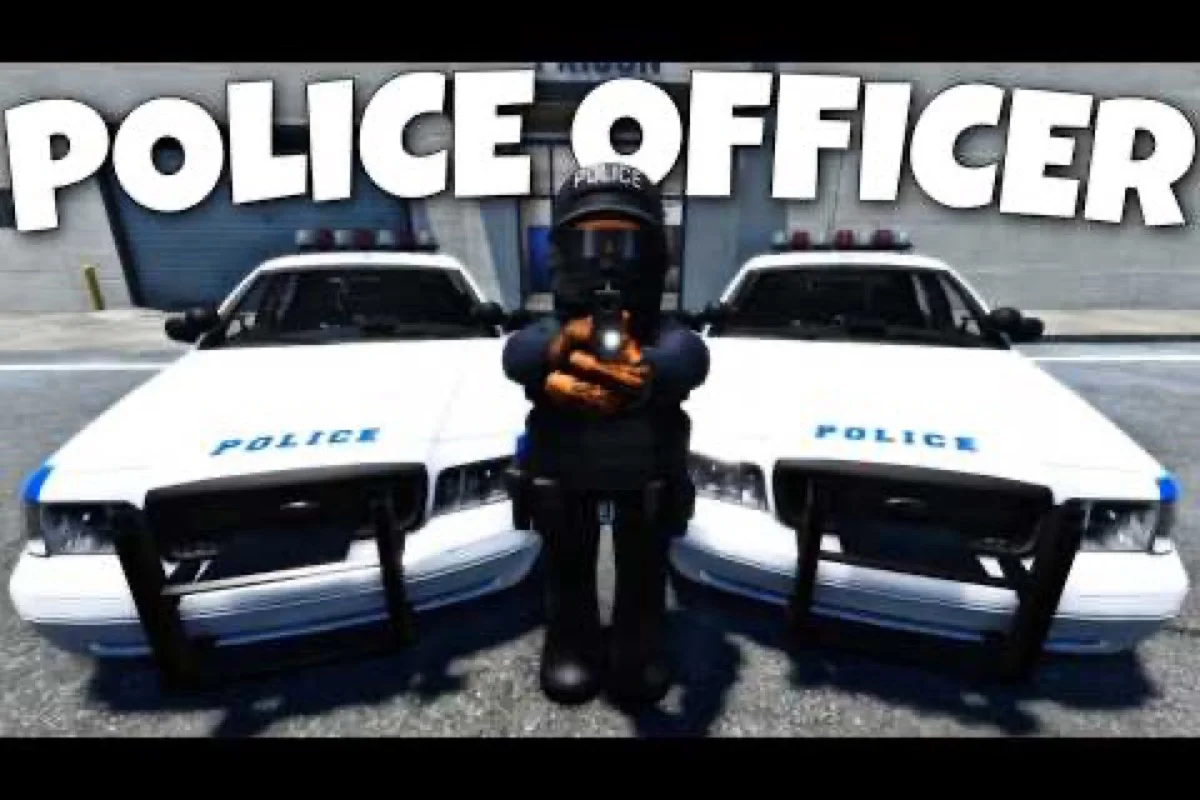
Becoming a THA BRONX 3 police officer gives you an active enforcement role instead of a passive badge, and the access flow is easier to understand once you separate the public game pass, badge status, and arrest procedure.
The THA BRONX 3 Police Officer Role at a Glance
The THA BRONX 3 police officer role turns ordinary encounters into structured law-enforcement scenarios. You identify a suspect, check the wanted level, approach carefully, make the arrest, and move the detainee into the prison and court process. That chain matters because each step has a different purpose: one establishes suspicion, another confirms legal status, and the last two determine what happens to the prisoner.
Community reporting indicates that role access comes from the public Police Officers pass, which adds an on-screen NYPD badge. The same report describes a full session involving wanted players and the prison loop, a claim that can be seen in semi’s 24-hour police officer community video. As of October 24, 2026, treat that pass requirement as the clearest supported route rather than promising a separate free career path.
| Police Officer element | Supported detail | Practical meaning |
|---|---|---|
| Role access | Police Officers pass | The pass supplies the NYPD badge and role capability |
| Badge display | On-screen NYPD badge | Other players can recognize your active role |
| Main activity | Respond to wanted players | Patrol turns an existing offense into an enforcement scene |
| Prison connection | Arrested players enter the prison loop | An arrest continues beyond the moment of capture |
| Community evidence | A documented 36:29 officer session | The role includes sustained patrols rather than a brief cosmetic unlock |
The role is most useful when you want a clearer purpose during public-server play. Instead of wandering between shops, loot routes, and chase opportunities, you can look for active incidents and coordinate with other players. Players learning the broader game loop can also use the THA BRONX 3 beginner guide to understand the basic controls before entering a law-enforcement scenario.
Inside the NYPD Officer Role in THA BRONX 3
The reliable route to becoming police is through the Police Officers pass. Once the game recognizes the entitlement, the game displays the NYPD badge on your character, giving you access to the police role. Because this depends on a purchase rather than a normal progression unlock, players searching for THA BRONX 3 how to become police information should look for the pass in the game’s official Roblox experience rather than waiting for a standard skill point.
The official THA BRONX 3 game page is the best place to confirm current availability, pricing, and any update-related changes. On October 24, 2026, the page showed an update timestamp for that day, approximately 12.17 million visits, about 3.9K concurrent players, 21.8K favorites, and a 91.7% like ratio. Those figures describe the public experience, not the value of the pass or a guaranteed server condition.
Buying and activating the role
The activation process is straightforward, but buying the pass does not make every choice around you more lawful. You still need to follow the officer workflow, avoid abusing your badge, and cooperate with the server’s roleplay state. For players asking THA BRONX 3 how to become a cop, think of the purchase as the key that unlocks the role rather than the entire role itself.
-
Open the official THA BRONX 3 experience and enter a public server.
-
Locate the Roblox store interface and review the Police Officers pass listing.
-
Confirm the current price and displayed benefits before purchasing, since offers can change with updates.
-
Equip or activate the pass through the normal Roblox menu.
-
Enter the game and verify that the NYPD badge appears on your character.
-
Use the role to respond to active police situations rather than merely displaying the badge.
What to check after purchase
If the badge is missing, leave and rejoin the server, confirm that the purchase is attached to the correct account, and inspect the game’s pass interface for a delayed activation notice. Community sessions have demonstrated the badge flow, but interface labels may change after a patch. The separate THA BRONX 3 police and prison guide can help you separate the officer badge from the larger law, prison, and court system.
Understanding Wanted Levels and Suspect Identification
The wanted level is the clearest reason to call an officer. It communicates that a player is already involved in criminal activity, so an arrest should develop from that existing state rather than a sudden decision based solely on personal disagreement. A THA BRONX 3 wanted level can also determine how the suspect reacts, how much urgency the scene has, and whether other officers need to intervene.
Players should still verify the situation instead of assuming every visible confrontation is an arrest opportunity. Look for a displayed wanted status, active combat, a victim calling for help, or clear police radio and phone activity. If the suspect is already dead, surrounded, or in an impossible position, creating an arrest scene may not be realistic or safe. Good police roleplay begins with a reason to act.
| Observation | Likely response | Reason it matters |
|---|---|---|
| Visible wanted indicator | Track and approach when safe | Confirms existing criminal suspicion |
| Armed suspect in active combat | Wait for a clear opening | Prevents a chaotic arrest attempt |
| Phone or radio report | Verify the location | Gives officers a lead to investigate |
| Dispute without a crime | Do not force an arrest | A badge is not a license to bully |
| Suspect already restrained | Assist with transport | The arrest phase may already be complete |
| No wanted status and no offense | Stand down or ask questions | Creates believable police conduct |
Knowing the wanted status also prevents false arrests that can derail roleplay. If you are still learning the systems, review the broader THA BRONX 3 roleplay guide for practical methods of framing scenes, respecting boundaries, and keeping interactions believable. A police role works best when the suspect, witnesses, and officers all have room to act consistently.
How to Arrest Suspects Without Breaking the Flow
A good arrest has three parts: create a reason, control the risk, and complete the transport. Rush directly toward an armed suspect and the encounter becomes another gunfight. Approach deliberately, communicate the officer status, give the suspect a chance to surrender, and use force only when the scene requires it. That sequence makes the arrest easier to understand and keeps the prison transition meaningful.
A reliable arrest sequence
Begin by confirming the wanted level and identifying the suspect. Make your badge visible and announce that you are responding to the incident. If the suspect surrenders, initiate the arrest rather than firing first. If they resist, use cover and your available weapon to create a safe opportunity. After the suspect is subdued, activate the arrest or custody function shown in the officer interface.
The exact button prompts may change when the developers revise the interface, so avoid treating any one keybind as permanent. The more durable principle is the state transition: wanted suspect becomes arrested detainee, then the detainee becomes a prisoner. Button Bully’s new prison and police update showcase provides useful community evidence for the updated systems, including the relationship between police work and incarceration.
Arrest decision checklist
Before engaging, confirm each of the following: An officer with a reliable sidearm still needs restraint. If your priority is capture rather than neutralization, the THA BRONX 3 best pistol guide can help you compare starter and looted sidearms before entering a patrol. Weapon choice matters less than patience, positioning, and clear communication.
Patrol Methods for a Realistic THA BRONX 3 Shift
A shift works best when it has a rhythm: receive information, travel, observe, intervene, transport, and return. Wandering randomly across the map can produce encounters, but it often leaves officers out of position when a wanted player appears. Community footage shows that sustained officer sessions are possible, yet the supplied research does not provide verified response times, patrol routes, pay rates, or exact spawn locations. Those details should not be invented as fixed facts.
Use known destinations as patrol anchors instead. Common activity tends to occur around retail areas, fuel stations, public blocks, residential locations, and transportation routes, although the presence of a suspect depends entirely on the live server. When your wanted level has no visible indicator, ask experienced officers or watch phone and radio activity for fresh leads.
| Patrol phase | Officer objective | Useful behavior |
|---|---|---|
| Briefing | Learn what is active | Listen for reports and compare them with visible incidents |
| Travel | Reach the incident safely | Avoid speeding through crowded areas or crashing into suspects |
| Observation | Identify the suspect and exit | Watch for the wanted indicator and armed opponents |
| Intervention | Create a surrender opportunity | Announce the badge, use cover, and avoid excessive force |
| Arrest | Secure the suspect | Activate the arrest state once the target is subdued |
| Transport | Move the detainee toward processing | Preserve roleplay and keep the prisoner from escaping |
| Return | Resume the patrol | Record the outcome mentally and watch for another call |
Solo and cooperative patrol choices
A solo officer should favor visibility, distance, and safe cover. Joining a busy group may increase the chance of finding an offense, but it can also make arrests less readable when several players fire at once. A coordinated group can cover more ground, assign one officer to communicate, and avoid everyone chasing the same suspect.
The main public servers hold 30 players, according to the official page snapshot, while the separate THA BRONX 3 RP Server on Roblox offers a slower and more rule-driven environment. If your priority is thoughtful law-enforcement scenes, the RP experience may provide a cleaner setting for the police role, although specific officer features and availability can vary between experiences.
Officer Loadout, Etiquette, and Common Mistakes
The Police Officers pass supplies the badge, but preparation still affects your effectiveness. Carry a dependable weapon, keep ammunition available, and choose a route that lets you react if the suspect is already in combat. The supplied research does not confirm whether officers receive unique equipment, discounted firearms, or official armor, so do not build the loadout around an unverified perk.
Roleplay quality is just as important as combat performance. The badge communicates authority, not permission to harass. Avoid arresting someone with no active offense, threatening civilians, or turning a law-enforcement call into a personal rivalry. When another officer reaches the scene, share useful information and avoid competing arrests that leave the detainee’s status unclear.
| Mistake | Why it damages the scene | Better approach |
|---|---|---|
| Arresting without a reason | Makes the badge feel like a bullying tool | Confirm the wanted level or reported crime |
| Firing at a surrendering suspect | Ends the scene without a lawful arrest | Offer surrender and use the arrest function |
| Chasing through a crowd | Creates friendly-fire chaos | Wait for separation or use a safer route |
| Ignoring the prison handoff | Leaves the arrest unfinished | Complete custody and transport steps |
| Following every dispute | Wastes time and creates false arrests | Prioritize active incidents and credible reports |
| Blocking other officers | Makes teamwork less efficient | Divide observation, capture, and transport roles |
Good etiquette also protects the role’s usefulness. When a suspect is already being handled, offer backup rather than firing. When civilian players enter the scene, give them room unless their behavior creates a legitimate reason for intervention. These habits may not appear in a menu, but they determine whether other players treat the badge as a meaningful role.
A Practical Officer Session Plan
A structured session lets you test the complete police role without treating every minute as random patrol. Start with the pass and badge, spend a short period gathering reports, handle one arrest from beginning to end, and then decide whether to continue with calls or roleplay. This plan also makes it easier to determine whether the purchase provides enough value for your preferred play style.
-
Confirm access: Enter the game and verify that the NYPD badge appears.
-
Choose a server type: Use the main experience for faster action or the RP server for slower scenes.
-
Establish patrol anchors: Identify active shops, blocks, homes, and routes where players gather.
-
Watch for calls: Track wanted players, phone reports, and visible incidents.
-
Investigate before engaging: Confirm the suspect’s status and separate danger from the actual offense.
-
Offer a surrender window: Make the badge visible and communicate your intention.
-
Arrest when safe: Use the available arrest control after the suspect is subdued.
-
Complete transport: Follow the supported prison processing flow.
-
Evaluate the pass: Consider whether access, badge display, and scenario variety match your expectations.
| Part of the session | Goal | Success signal |
|---|---|---|
| Access check | Confirm the role works | Badge appears without another purchase |
| Information gathering | Find believable calls | A suspect has a wanted status or clear offense |
| Intervention | End the threat responsibly | The suspect surrenders or is safely subdued |
| Arrest | Complete the custody transition | The detainee enters the arrest state |
| Prison handoff | Finish the consequence | Processing continues toward incarceration |
| Session review | Judge the purchase value | The role supports the kind of play you enjoy |
This approach also helps new players test the pass before committing to a long session. As of October 24, 2026, the official page and community videos support the existence of the badge-based officer role, but they do not establish a guaranteed queue, fixed arrest distance, or universal cooldown. Treat any such details as version-dependent and verify them in the live game.
Frequently Asked Questions
Do you need the Police Officers pass to become a THA BRONX 3 police officer?
Yes—you need the public Police Officers game pass to become a THA BRONX 3 police officer. It grants access to the NYPD police-officer role and displays the on-screen badge, letting you patrol, respond to wanted players, arrest suspects, and move them into the prison loop. You can obtain it through the official THA BRONX 3 Roblox experience.
Does becoming a cop automatically give you a wanted level?
No. The officer role and the wanted level serve separate purposes. Your badge identifies you as law enforcement, while a wanted level marks a player as a suspect in an active incident. A THA BRONX 3 police officer should respond to that status rather than create it, and you should confirm the offense before attempting an arrest.
What should an officer do after making an arrest in THA BRONX 3?
After the suspect is subdued, use the arrest control and continue the supported custody sequence. The community-documented flow places the detainee into the prison loop, where processing may continue toward conviction, sentencing, and release. Do not treat the arrest as the end of the encounter, and avoid confusing police custody with the court’s final decision.
Can you arrest a player without an active wanted level?
Technically, the game may allow an arrest interaction, but a responsible officer should not force an arrest without a legitimate reason. An active wanted level, credible report, visible offense, or established roleplay reason provides the clearest justification. Turning a normal disagreement into a forced arrest can damage the scene and undermine trust in the police role.